Skip to content
Call Get an Assessment

Sunday Maintenance

Property systems watched on a schedule, not discovered in a crisis.

Sunday Maintenance is a membership for the systems underneath a property — irrigation, drainage, grade and fence line. Someone comes out on a set rhythm, tests what cannot be seen from the driveway, and puts the condition of each system in writing. It is not a lawn service add-on. It is the reason a small failure stays small.

01

The case for a schedule

North Texas fails on a calendar.

The failures we get called about are not random. They arrive in a pattern set by freeze events, clay movement, storm intensity and eight weeks of heat. A schedule exists because the calendar is predictable even when the property is not.

JUST ENOUGH · 2 VISITS FULL SEASON · 4 VISITS JANFEBMAR APRMAYJUN JULAUGSEP OCTNOVDEC IRRIGATION STARTUP · FREEZE COVERAGE DRIFT HEAT · PRESSURE PEAK SHUTDOWN DRAINAGE SPRING STORM LOAD · INLETS LEAF LOAD · BASINS CLEARED GRADE & EROSION POST-STORM SILT MOVEMENT · SLOPE WALK FALL RAIN FENCING WIND · POST PLUMB CLAY SHRINKS · POSTS MOVE STAIN FREEZE EVENTS HARD FREEZE RISK RISK DENSER FILL = HIGHER LIKELIHOOD OF A SYSTEM BEING FOUND OUT OF SPEC IN THAT MONTH MARKERS SHOW WHEN A MEMBERSHIP VISIT LANDS RELATIVE TO THE RISK IT IS MEANT TO CATCH

The North Texas failure calendar

Inspection timing is set against the risk it is intended to catch, not against a convenient route. A March visit exists to find freeze damage before the first hot week; a November visit exists to make the January freeze a non-event.

MAR

Spring startup, after the freeze has already done its work

Cracked backflow assemblies, split poly, weeping valves and fractured heads usually happen in January and are not visible until the system is pressurized in spring. Charging the system slowly with someone watching it is the only reliable way to find them. Turning it on in May and hoping means the first symptom is a water bill.

MAY

Early summer coverage drift

Nothing breaks. Things move. Mower wheels rotate spray bodies, turf grows over arcs, a nozzle wears and throws short, a rotor stops rotating. The lawn still looks acceptable in May, which is exactly why the drift goes uncorrected until it shows up as a dry stripe in July.

JUL

Peak pressure demand and heat stress

Municipal pressure sags when a whole neighborhood is irrigating on the same early-morning window. Zones that were marginal in April go under-pressured in July, and marginal coverage becomes visible failure within two weeks. This is the month when a mid-summer visit stops a repair from becoming turf replacement.

SEP

Fall drainage load and grade check

Basins and inlets that were clear in June collect a season of leaf litter, silt and mulch wash. An inlet that is eighty percent blocked performs like no inlet at all during the first heavy autumn rain. Fall is also when a summer of clay shrinkage shows up as separation along walls, walks and the fence line.

NOV

Shutdown and freeze preparation

Backflow assemblies, exposed piping and above-grade components are the parts that break in a hard freeze, and they break because they still hold water. Draining and insulating the vulnerable components in November is a short visit. Repairing a burst assembly in February is not.

ANY

Post-storm drainage and grade walk

The useful time to look at drainage is while it is still working or failing. After a significant rain event we walk outfalls, low corners, slope faces and any area where silt has moved, because standing water tells you where the grade actually is rather than where the plan said it was. Full Season includes this walk.

02

Two levels

Choose by how many systems you have, not by how much you want to spend.

If the property is irrigation only, two visits a year covers the seasonal rhythm honestly. If it has drainage, a slope, or a fence line doing structural work, four visits is the version that actually watches the property.

Irrigation focused

Just Enough

The essential seasonal rhythm for a property whose main system is irrigation. Two visits, timed to the two moments that decide the year: startup and shutdown.

$249 Starting at, per year

Seasonal visits

Two scheduled inspections, booked by us and confirmed with you.

  • 2 seasonal system inspections per year
  • Spring startup with slow pressurization and leak watch
  • Fall shutdown with freeze preparation of exposed components

Irrigation inspection

Every zone run and watched, not sampled from the controller.

  • Zone-by-zone coverage check on foot
  • Head alignment, arc reset and nozzle adjustment
  • Static and operating pressure read at the source
  • Valve box condition and visible seepage check
  • Backflow assembly visual condition check

Controls and documentation

The schedule leaves set for the season ahead, and in writing.

  • Controller schedule programmed for the coming season
  • Rain and freeze sensor function test
  • Written condition report with photos after every visit
  • Priority scheduling ahead of non-members
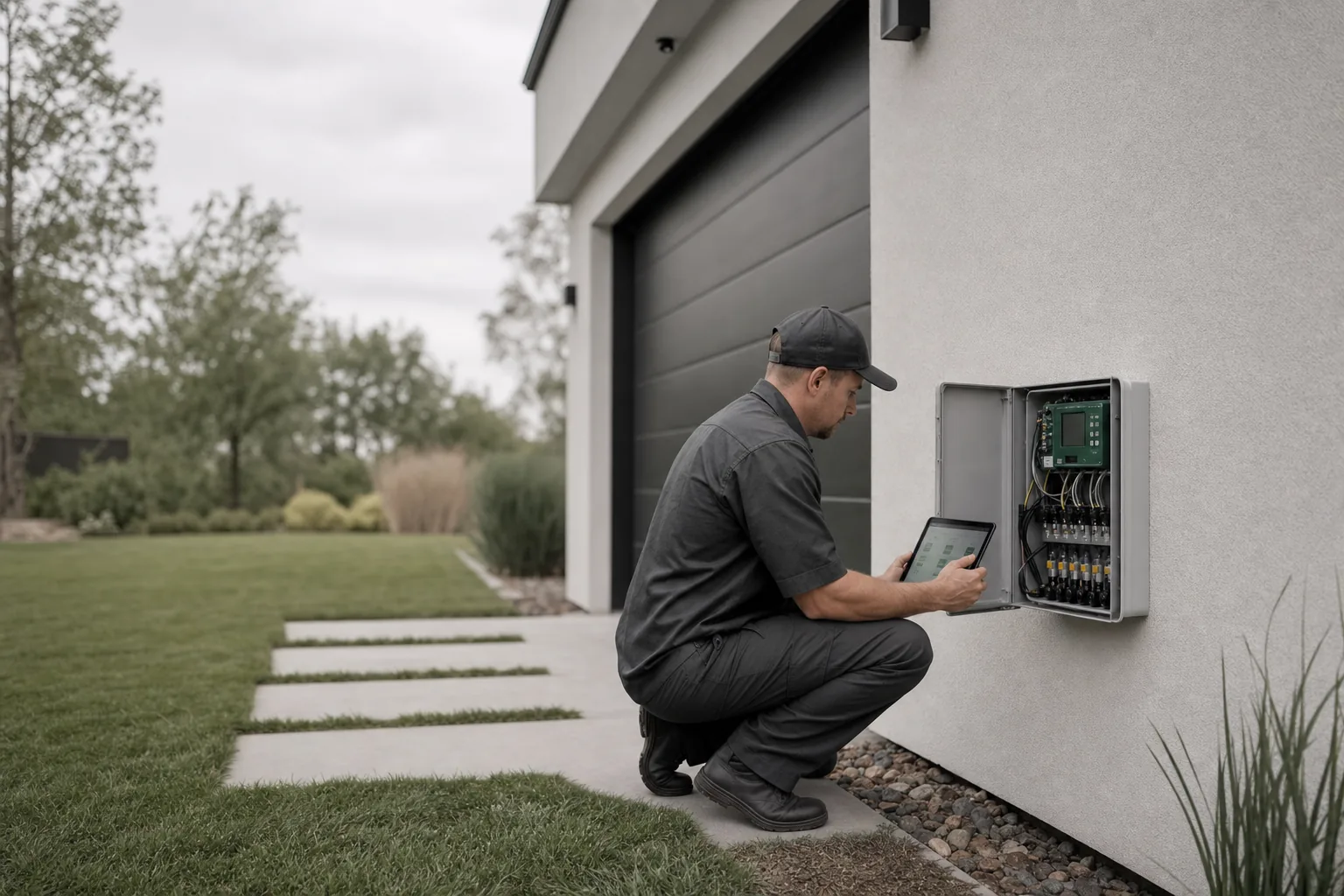
Plan comparison. Final pricing depends on system size, zone count and property acreage.

What’s included Just Enough Full Season
Seasonal inspections per year24
Zone-by-zone coverage check on footIncludedIncluded
Pressure read at the sourceIncludedIncluded
Head alignment and nozzle adjustmentIncludedIncluded
Controller programming by seasonIncludedIncluded
Rain and freeze sensor testIncludedIncluded
Backflow assembly condition checkIncludedIncluded
Written condition report with photosIncludedIncluded
Mid-summer peak-heat visitNot includedIncluded
Catch basin and inlet clearingNot includedIncluded
Outfall and discharge inspectionNot includedIncluded
Grade and erosion walk after stormsNot includedIncluded
Fence post, rail and gate hardware checkNot includedIncluded
Winterization and freeze protectionNot includedIncluded
Annual property systems summaryNot includedIncluded
Member savings on repairs20%
Response windowPrioritySame week
Multiple properties on one agreementBy requestBy request
Starting price$249/year$589/year
03

Scope of work

What an inspection actually covers.

A useful inspection is a test, not a look. Every zone runs while someone stands in it. Pressure gets a gauge on it. Basins get opened. The report reflects what was measured, not what appeared fine from the street.

01

Irrigation

The zone is the unit of measurement, because a system does not fail evenly — it fails one zone at a time.

02

Drainage

Inspected as a route from where water enters to where it is legally released. A clean basin over a blocked line is worse than no basin.

03

Grade & erosion

Clay moves seasonally, so the grade that worked at install is a claim that has to be re-checked, especially after storms.

04

Fencing

A fence in expansive soil is a structure under load. Post movement is measurable long before a panel visibly leans.

Irrigation, zone by zone

Every zone is run for long enough to watch it operate. That is how a rotor that no longer rotates, a head throwing into a wall, or a lateral losing pressure gets found. Controller-side diagnostics do not show any of it.

  • Zone runEvery zone, on foot
  • PressureStatic and operating at source
  • Head arcsReset to hardscape edges
  • AlignmentPlumb and grade height
  • NozzlesWear and matched precipitation
  • ControllerReprogrammed for the season
  • SensorsRain and freeze function test
  • BackflowCondition and insulation
  • ValvesBox condition, seepage, wiring
Irrigation controller open at the panel during a seasonal programming and diagnostic check Seasonal controller programming
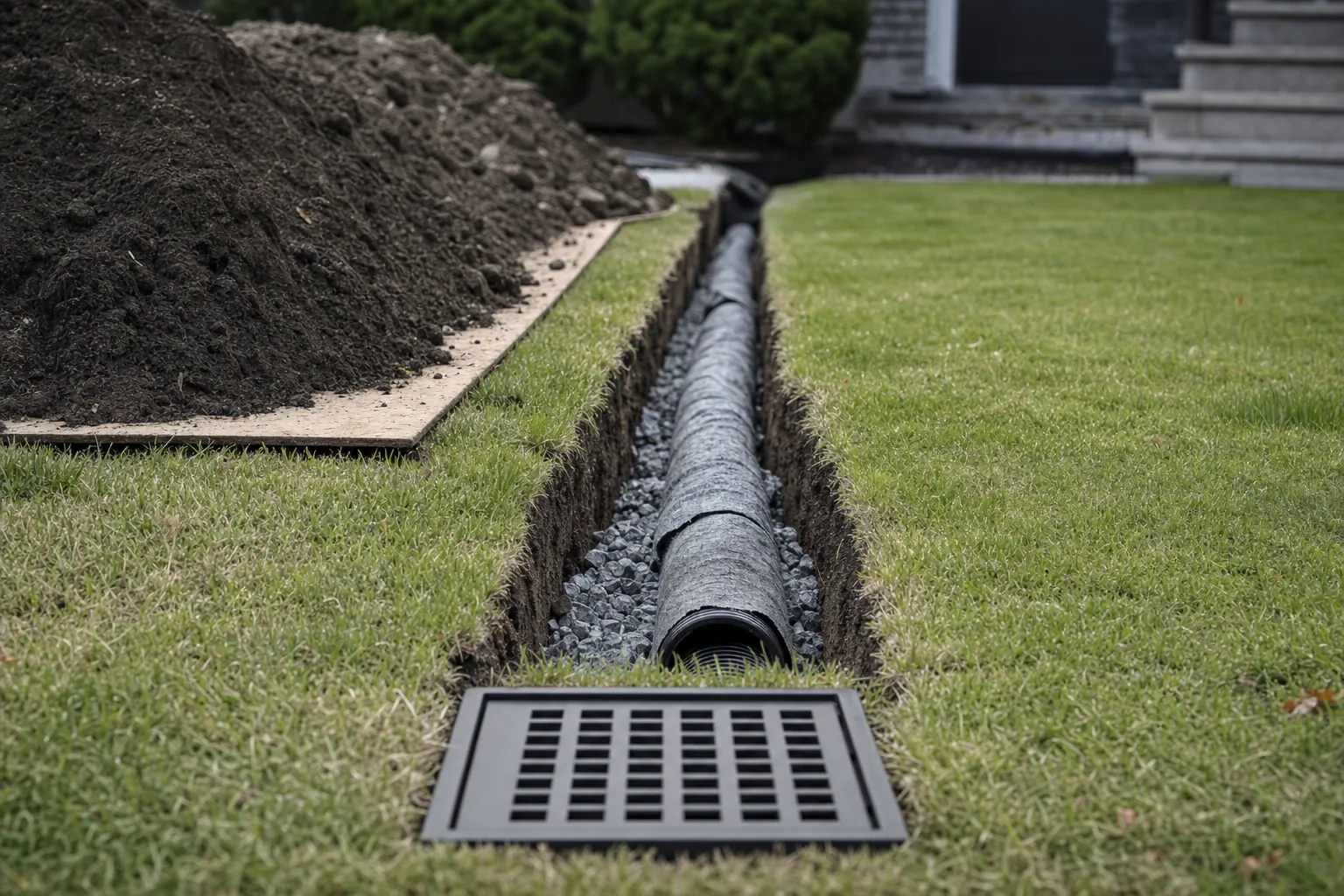
Open drainage trench with perforated pipe bedded in gravel before backfill Inlet to outfall, checked as one route

Drainage, grade and erosion

Drainage is checked in the order water travels. Inlets and basins are opened and cleared, the line is checked for flow, and the outfall is confirmed to be discharging rather than silted shut. After heavy rain, a standing-water walk tells us where the surface actually falls.

01

Basins, inlets and grates

Opened, cleared of silt and leaf pack, grates checked for seating and damage.

02

Outfall and discharge

Confirmed open and daylighting correctly, with no back-siltation or crushed termination.

03

Standing-water walk

A post-rain walk of the low points, patio edges and structure perimeter while the evidence is still there.

04

Slope and silt movement

Slope faces checked for rilling, silt deposits and undermining at the toe; erosion control condition documented.

Fence line as a structural system

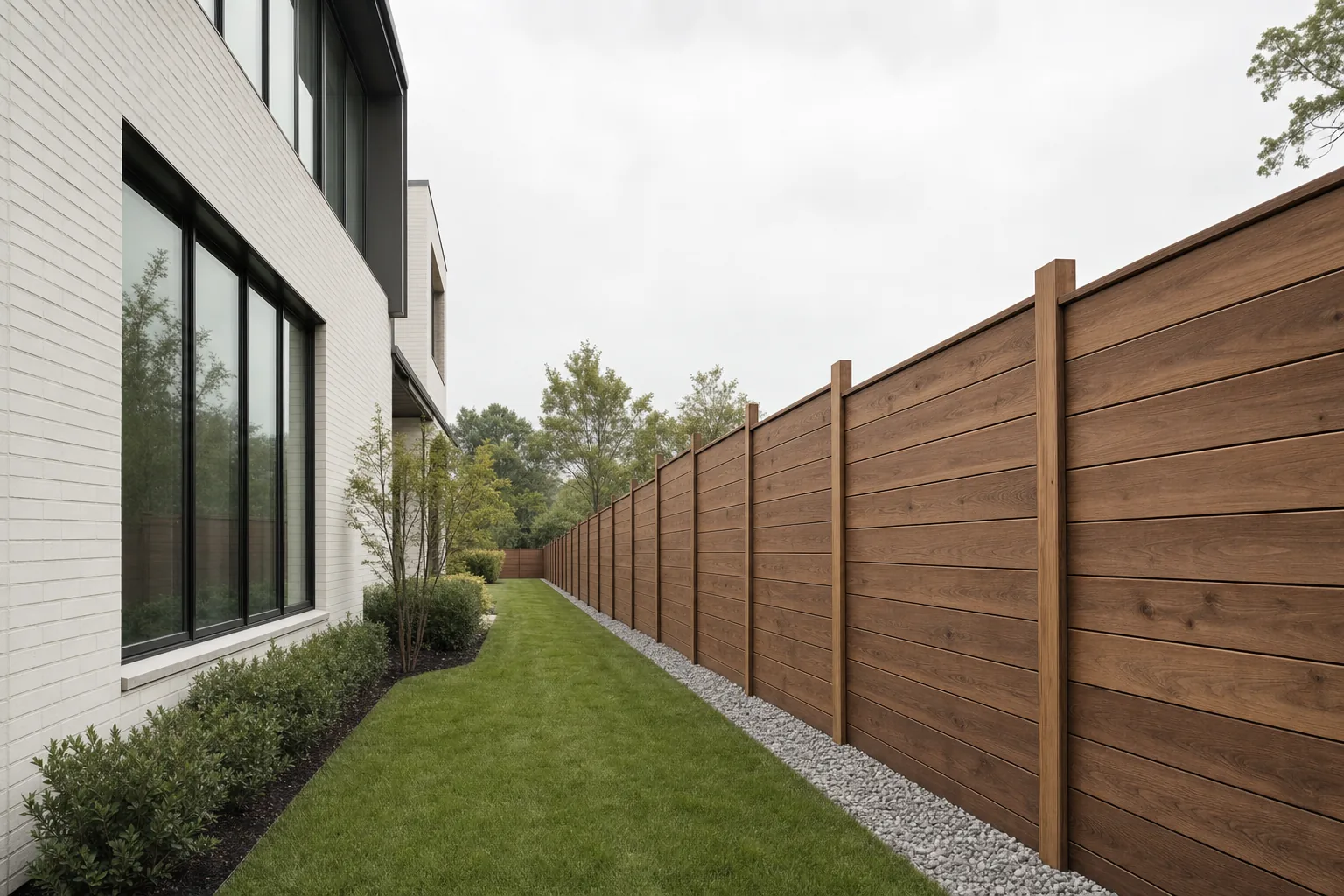
In expansive clay, posts are the whole conversation. Summer shrinkage opens the soil around a post, winter moisture swells it closed, and a post that was plumb at install is out of plumb two seasons later. Catching movement early is a hardware adjustment. Catching it late is a rebuild.

  • PostsPlumb, movement, base condition
  • RailsFastening, sag, rot at contact
  • PicketsCupping, splitting, ground contact
  • GatesSwing, latch, hinge load
  • HardwareCorrosion and fastener backout
  • FinishStain wear and sun exposure
Long cedar privacy fence run along a residential property line Post plumb and gate hardware survey
04

The deliverable

What you get in writing.

Every visit ends in a condition report sorted into three states. Nothing is described as urgent unless it is, and nothing is quietly left out because it would be inconvenient to mention.

01

What is fine

Named explicitly, system by system. Knowing a zone tested within spec is worth as much as knowing one did not, and it gives next season a baseline.

02

What is drifting

Conditions that are not failures yet: a nozzle wearing, a basin filling, a post showing early movement. Noted with the season we expect it to matter.

03

What needs action

Photographed, described in plain language, and priced as line items you can accept or decline individually. No bundled totals.

The annual property systems summary

Full Season members get a year-end document that reads the property across all four visits rather than one afternoon. It records what was corrected, what is being watched, how the system performed through the summer and the freeze, and where we expect the next investment to be needed. If a repair is going to be repeated indefinitely, the summary says so and recommends the rebuild instead.

It is also the document that matters when a property changes hands or a manager changes. The system stops living in one person’s memory.

  • CadenceAfter the final visit of the year
  • ContentsAll four visits, consolidated
  • FormatWritten, with photo record
  • IncludesWatch list and expected work
  • PlanFull Season only
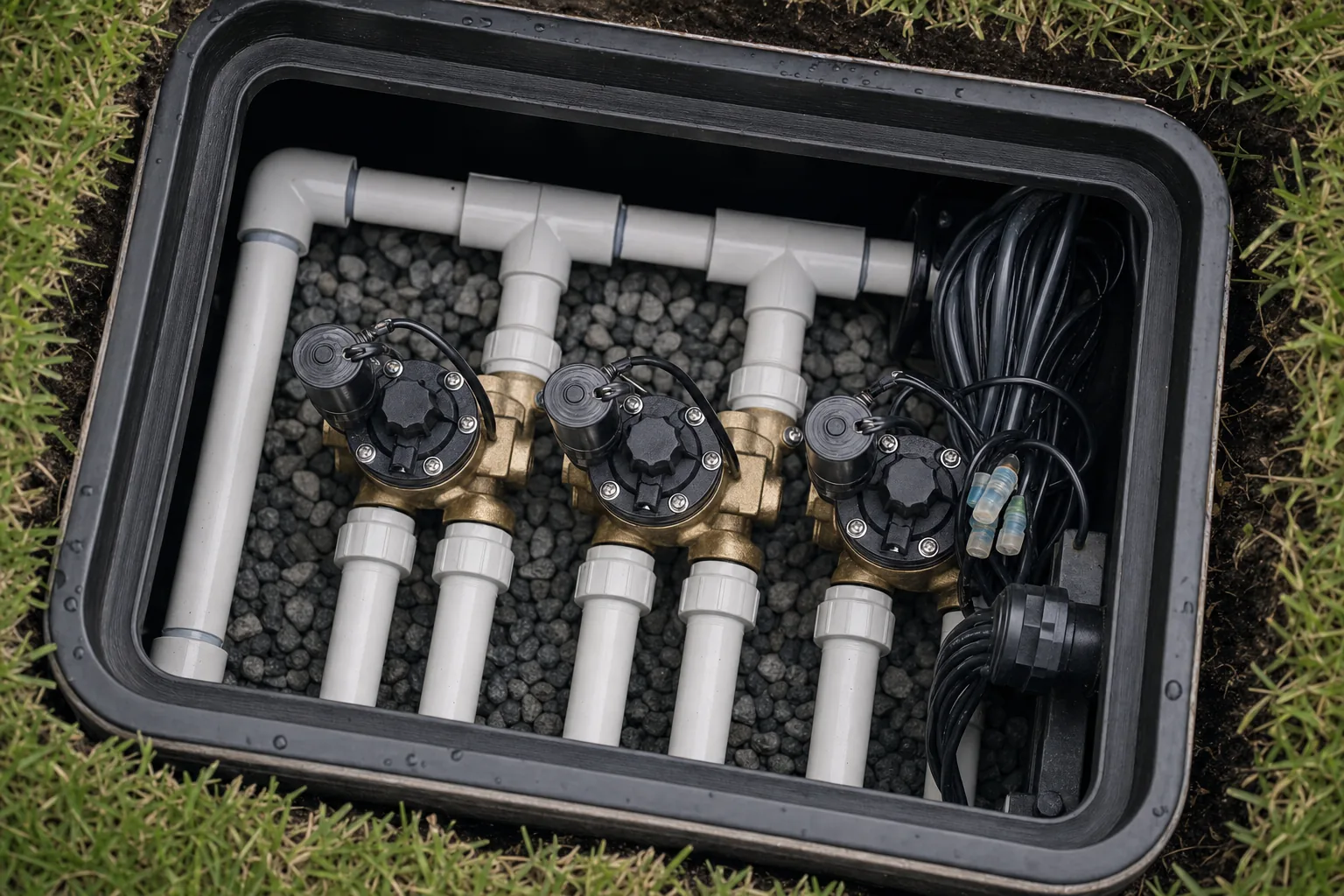
Open valve box showing a manifold, wiring and solenoids during a documented inspection Documented, not described
05

Honest boundaries

What a plan does not include.

A membership that claims to cover everything covers nothing in particular. Sunday Maintenance is inspection, adjustment and documentation of property systems. Here is where it stops.

Lawn care

No mowing, edging, fertilization, weed control, aeration or seeding. We inspect the systems that keep turf alive; we are not a lawn service.

Tree and bed work

No pruning, tree removal, stump work, mulch installation or planting. If roots are the cause of a drainage or line failure, we document it and coordinate scope.

Major replacement

Component replacement, line repair, basin installation, regrading, fence rebuilds and system expansion are quoted as projects — at member pricing on Full Season.

Certified backflow testing

We check assembly condition and freeze protection at every visit. Municipality-required certified testing and filing is separate licensed work, quoted when your city requires it.

Pools, lighting and hardscape

Pool equipment, low-voltage lighting, retaining wall construction and paving are outside scope. Where they interact with drainage, that interaction is documented.

Storm damage restoration

Cleanup after a severe event is project work. Membership determines how quickly we get there and what the repair costs, not whether it is free.

Sometimes the answer is smaller than what you asked for. If a property has one zone and no drainage infrastructure, we will tell you a plan is not worth the money and to call us when something changes.

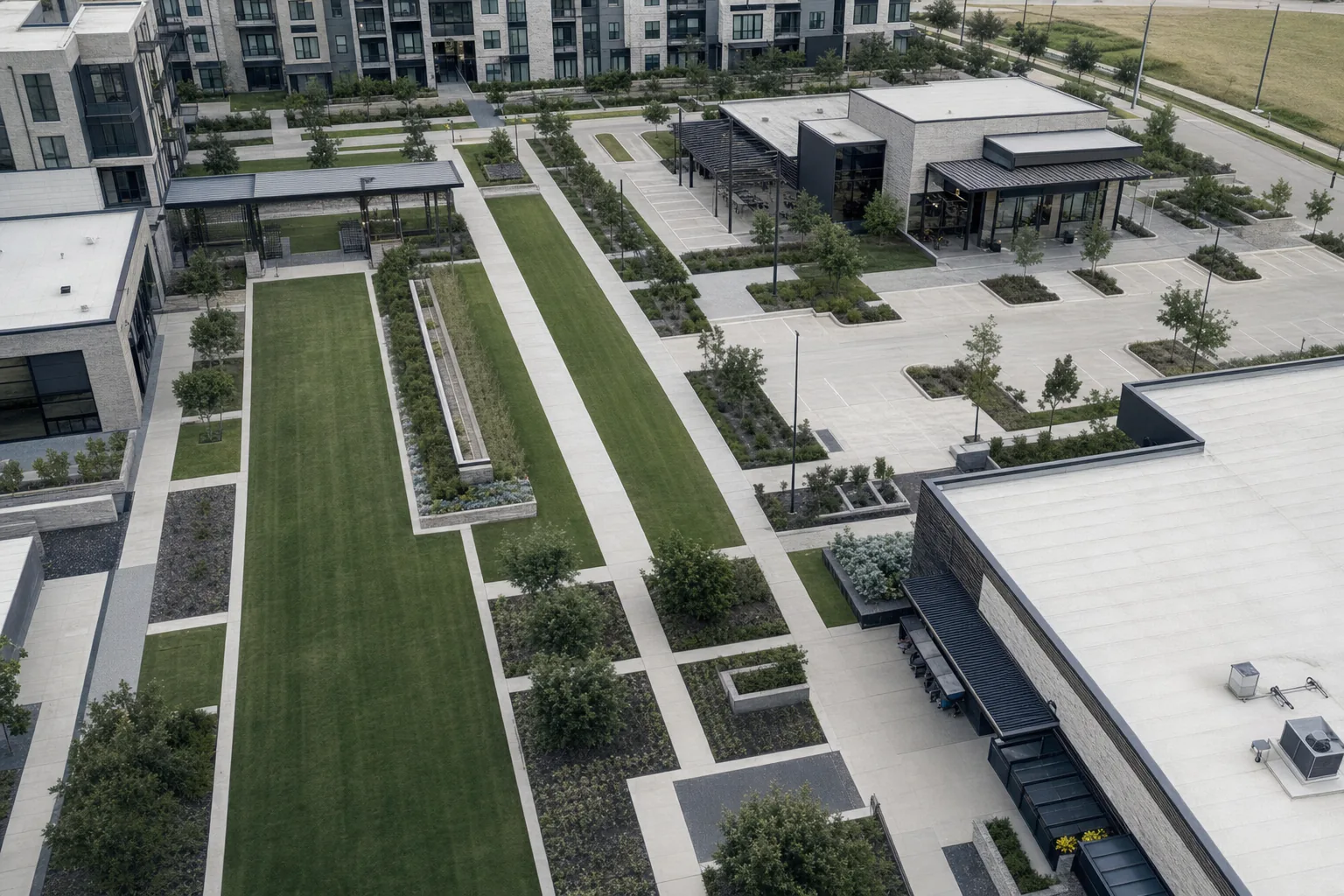
Aerial view of a commercial campus with turf areas, parking and drainage corridors Sunday Commercial

Commercial · Property managers · HOA

Portfolios are quoted, not priced off a page.

Multi-property work runs on documented scopes and repeatable schedules: the same inspection checklist at every address, service windows that respect tenants and residents, one point of contact across the portfolio, and reporting formatted so a board or an owner can read it without translation.

Because acreage, zone counts, controller counts and drainage infrastructure vary enormously between a twelve-home HOA common area and a corporate campus, there is no honest published price. We walk the portfolio, document what is actually there, and quote the program.

  • ScopeDocumented per address
  • ScheduleFixed service windows
  • ReportingPer property and portfolio roll-up
  • ContactOne account lead
  • PricingQuoted per portfolio
06

Questions

Before you enroll.

It is worth it if you would rather find a failing valve in March than during the first week of August. Two things drive the value: scheduled inspection catches drift before it becomes damage, and on Full Season the 20% member savings offsets a meaningful share of the annual cost the first time a repair is needed. If your property is a single small zone with no drainage infrastructure, we will tell you a plan is not worth it.

Then the visit is still doing its job. You get a written record that every zone tested within spec, the schedule reset for the season ahead, basins cleared, and a baseline to compare against next time. Most visits are a mix: a few adjustments, one or two items on the watch list, nothing urgent. A quiet report is the product working, not the product failing.

Yes. Membership runs annually and you can decline renewal. If you cancel partway through a term, we settle up against the visits already performed rather than holding you to the remainder. There is no cancellation penalty and no automatic multi-year commitment.

Yes, and most enrolled properties are exactly that. The first visit takes longer because we document what is actually in the ground: zone count, head and nozzle types, controller model, valve locations, drainage routing where it can be traced. If we find something we would not have built, we tell you whether it is worth keeping. We do not require a rebuild as a condition of membership.

You get it in writing with photos, a plain-language explanation of the cause, and line-item options priced separately — typically a minimum repair, a proper correction, and where relevant a rebuild that ends the recurring cost. Nothing proceeds without your approval. Full Season member savings apply to the repair. If something is safe to defer, we say which season it can wait until.

We schedule them. Visits are booked against the seasonal windows and confirmed with you ahead of time, so the March startup does not depend on you remembering in March. You do not need to be home for a routine inspection, though most members prefer to be there for the first one. Storm-triggered grade walks on Full Season are initiated by us after a significant rain event.

It applies to repair work on the systems your plan covers — irrigation components, drainage corrections, erosion repairs and fence repairs. It does not apply to full system installations, new drainage systems, complete fence replacements, or third-party costs such as permits and municipal fees. The exclusions are stated on the membership agreement rather than discovered on the invoice.

Multiple addresses can sit on one agreement with one point of contact, but each property is priced on its own systems — acreage, zone count and drainage infrastructure differ too much to average. For portfolios, HOA common areas and commercial campuses we quote a program with documented scopes and fixed service windows. Start with a conversation rather than a plan selection.

Enrollment

Enroll a property.

Tell us the address and which plan you are leaning toward. Enrollment starts with a first inspection, which is also where the property gets documented — zone count, controller, drainage routing, fence condition. If that visit shows the property needs the other plan, we say so before anything renews.

  • Step 01Submit the property
  • Step 02Plan confirmed and priced
  • Step 03First inspection scheduled
  • Step 04Written condition report
  • Step 05Remaining visits calendared

Prefer to talk it through first? Call (817) 320-0028 or email hello@sundayirrigators.com.

Enroll in Sunday Maintenance

We confirm plan fit and pricing before the first visit is scheduled.

No obligation. A Sunday specialist confirms plan fit and pricing before any visit is scheduled.

Managing several properties? Ask about Sunday Commercial

Enrollment request received.

A Sunday specialist will confirm the plan that fits the property, price it against zone count and acreage, and schedule the first inspection. If it is urgent, call (817) 320-0028.

Next step

Put the property on a schedule.

The failures we get called about in August were visible in March. A membership is simply the decision to be there in March.

  • Visits scheduled by us against the seasonal windows
  • Written condition report with photos after every visit
  • Line-item options you can accept or decline individually
  • Stated exclusions, so the scope is knowable in advance