Gate posts are not fence posts
A gate post carries a cantilevered load in motion. Larger section, deeper footing, more concrete — or steel. Reusing a standard line post is the single most common reason a gate sags within a year.
550 Reserve St., Southlake, TX · hello@sundayirrigators.com
Service · 05
Above ground it is pickets, rails and stain. Below ground it is a series of small foundations set in clay that expands and contracts every season. Fences fail from the bottom up, which is where we start specifying them.
Failure modes
Almost every leaning fence we replace was built correctly above the ground and incorrectly below it. Six causes account for nearly all of it, and they compound.
The soil changes volume with moisture. Wet clay swells and lifts; dry clay shrinks and pulls away, opening gaps around the footing. Every cycle rotates the post a little further out of plumb.
A post set in the most active layer of soil is a lever with the fulcrum in the wrong place. Depth is the cheapest structural upgrade available on a fence and the first thing cut to hit a low number.
A footing poured flat or dished holds water against the post. A fence line sitting in a low, saturated strip rots at the base and moves with soil that never dries.
A privacy fence is a sail. A six-foot solid run collects real pressure in a North Texas storm, and every bit of it transfers into the footings.
Rails resist picket cupping and carry racking loads. Two rails on a six-foot fence, or four-foot post spacing stretched to nine, shows up as a wavy line within a couple of summers.
Any member touching soil or concrete needs to be rated for it. Untreated material in ground contact is a scheduled failure with an unusually short schedule.
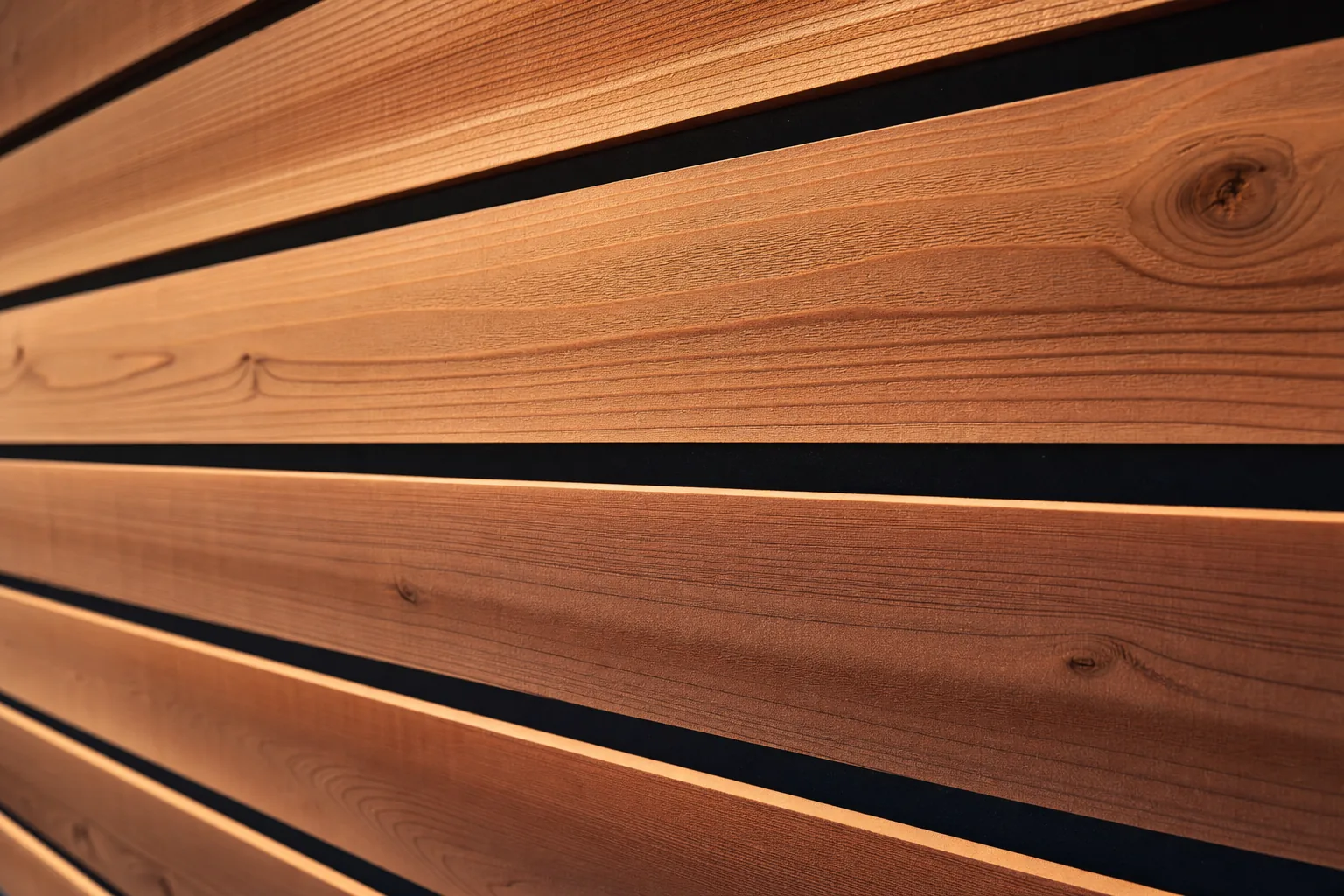 Cedar pickets, treated framing, stainless-rated fasteners
One more failure mode worth naming: fasteners. Electro-galvanized nails in cedar and treated lumber corrode and bleed, streaking the boards and losing hold. Coated or stainless-rated fasteners cost a fraction of a fence and decide how it looks in year five.
Detail
Depth, footing shape, drainage at the base and rail count. Four decisions that are invisible on the day of installation and decide everything after it.
Depths, footing diameters and rail counts shown are typical North Texas practice. The specification for your fence is set by height, exposure, soil and gate size.
Height changes more than the picket length. Rail count, post section and post spacing all tighten as the panel gets taller and catches more wind.
Materials
There is no single best material. There is a right material for a given run, exposure and budget — and there are combinations that outperform either option alone.
| Consideration | Cedar | Treated pine | Composite |
|---|---|---|---|
| Rot and insect resistance | Natural | Chemically treated | Not organic |
| Tendency to warp and cup | Low | Higher as it dries | Minimal |
| Ground contact rated | Not for posts | Yes, when rated | Framing still needed |
| Appearance new | Warm, tight grain | Green or tan cast | Uniform, manufactured |
| Appearance weathered | Silver-grey patina | Grey, more movement | Holds original color |
| Stain and seal | Takes finish well | Needs drying time first | Not applicable |
| Relative material cost | Higher | Lowest | Highest |
| Typical Sunday use | Pickets and trim | Posts and rails | Low-maintenance runs |
Picket layout changes privacy, wind behavior, board count and cost. It also changes what your neighbor sees, which some HOAs have opinions about.
The parts nobody discusses at the estimate are the parts that determine whether the fence is still straight and still swinging in a decade.
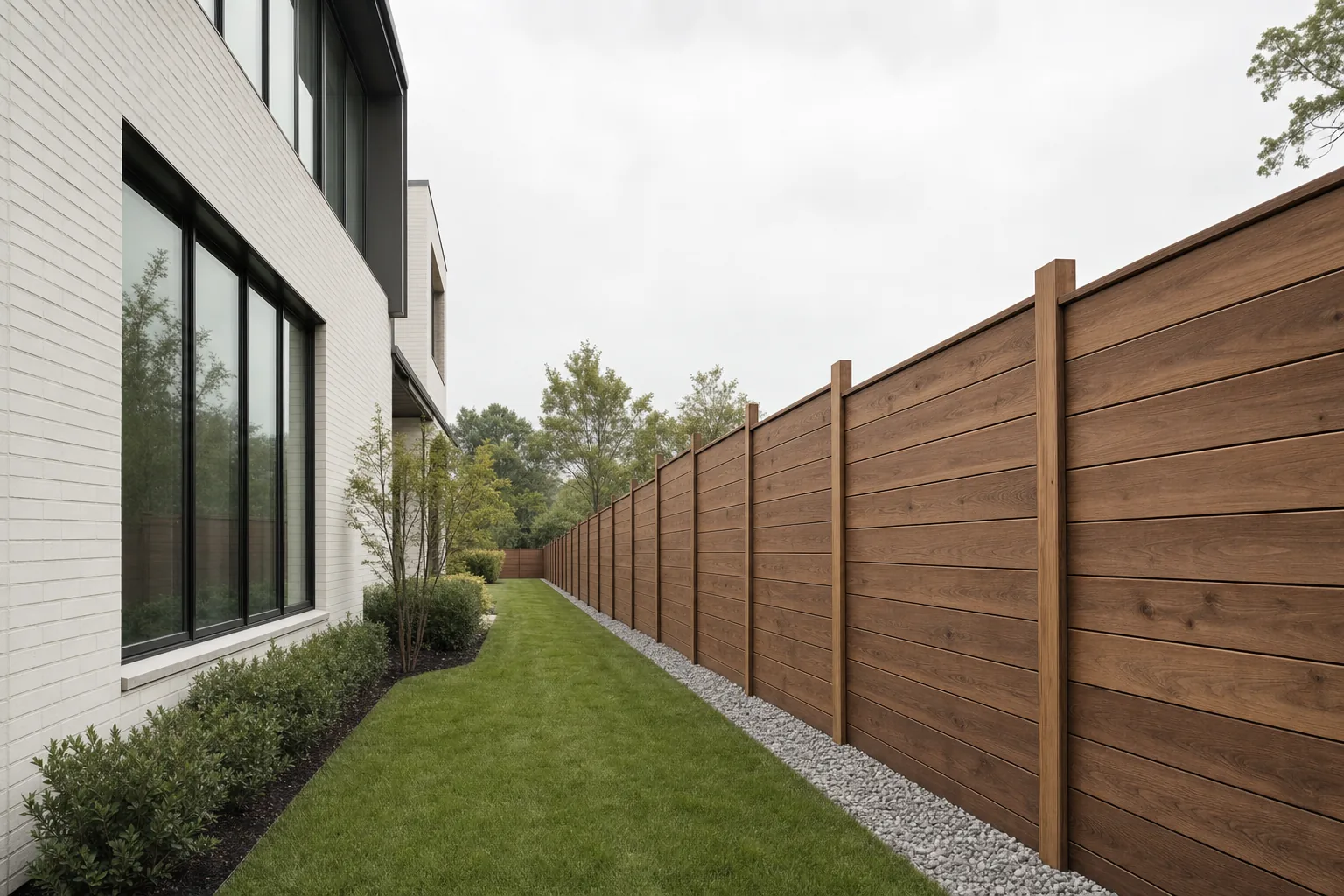 Board-on-board cedar, set to follow grade
The line
Nobody inspects a picket. What people see is the line: whether the top runs true, whether the posts are plumb, whether the fence follows the grade or fights it. That is a layout decision made before the first hole is dug.
On sloped ground there are two honest options. Racked, where the panel follows the grade and the top line stays parallel to the ground. Stepped, where panels stay level and step down at each post, leaving a triangle at the bottom that has to be closed deliberately. We show you which one your slope wants and what each one will look like from the patio.
Post layout is set to the run, the corners and the grade change, not to a tape measure and hope.
Irrigation lines, low-voltage wiring and utilities get located. We do our own irrigation work, so we know what is usually buried along a fence line.
Framing a fence onto green footings pulls posts out of plumb. It is the fastest way to build a wave into a brand-new line.
Gates
Everything else on a fence stands still. A gate moves, several times a day, carrying its own weight on two or three fasteners. It is the only moving assembly in the whole structure and it is usually built from the same parts as the fence.
A gate post carries a cantilevered load in motion. Larger section, deeper footing, more concrete — or steel. Reusing a standard line post is the single most common reason a gate sags within a year.
A rectangle racks. A triangle does not. Diagonal bracing runs from the bottom hinge corner upward, or a steel frame carries the load and the wood simply clads it.
Heavy hinges, through-bolted rather than screwed into face grain, with adjustment so the gate can be re-trued after the soil moves. Latches reachable from both sides where that matters.
Soil rises and falls seasonally, so a gate that just barely clears in February drags in July. We set clearance and reveal with that movement accounted for.
A wide opening for equipment access needs a fixed leaf. A drop rod into a sleeve gives the active leaf something solid to latch against instead of another moving panel.
Mowers, trailers, a mini excavator for future drainage work. It costs almost nothing to widen an opening at build time and a great deal to widen it later.
Fences and water
Property lines are frequently the low line. Grade falls to the back of the lot, the fence gets built along the bottom of it, and the posts spend a week in saturated clay after every storm. Wood in ground contact stays wet, clay at the footing never gets a chance to stabilize, and the line starts to move.
So we walk the drainage before we price the fence. Sometimes that means a swale behind the line or a collection line tied into an outfall. Sometimes it means telling you that replacing the fence without fixing the water is buying the same problem twice — and that we would rather do the drainage first.
Practicalities
A fence built on the wrong side of a boundary is an expensive misunderstanding. We work from the plat and any available survey, locate corners and irons where we can, and set the line accordingly. If the boundary is genuinely unclear, the right answer is a surveyor, not a confident guess from a contractor.
Most North Texas neighborhoods with an association have written standards on height, material, picket orientation, stain color, cap detail and which side shows the finished face. Some require submittal and approval before work begins. We tell you what your documents appear to require and build to the approved detail, so nothing has to come back down.
Many cities require a fence permit, and rules commonly cover maximum height, height limits in front yard setbacks, sight-line restrictions on corner lots, and requirements around alleys, easements and pool enclosures. Pool barrier requirements in particular are safety code, not preference, and they govern gate hardware and self-latching height.
Utility and drainage easements often run along rear property lines. Building across one is sometimes allowed and sometimes not, and in either case the utility retains the right to access it — which can mean removing a section of your fence. That is a fact worth knowing before construction rather than after.
When a fence sits on a shared line, the conversation with the neighbor is part of the project. Cost sharing, which face shows out, and access from both sides during construction are all easier to settle before the old fence comes down.
Questions
Because expansive clay changes volume with moisture. It swells when wet and shrinks when dry, and it does that most aggressively in the upper few feet of soil — exactly where shallow posts live. A post set too shallow, in a hole too narrow, with water collecting at its base, is being levered back and forth every wet and dry cycle.
As a rule of thumb, roughly a third of the total post length goes underground, which typically puts a six-foot fence around 30 to 36 inches deep and an eight-foot fence deeper still. In expansive clay the goal is to carry the footing below the most active moisture zone and to give it enough diameter to resist rotation. Final depth is set by the soil and the fence height on your specific line.
Cedar is naturally rot and insect resistant, stays straighter over time and weathers to a better color, which is why we use it for most privacy pickets. Pressure-treated pine costs less and is the right choice for ground contact and structural members. Many of our fences use both: treated posts and rails carrying cedar pickets.
Steel posts do not rot, twist or warp, and they hold a straight line longer than wood in clay. They cost more up front and require proper attachment detailing so the wood framing can move without tearing at the fasteners. On long runs, tall fences and wind-exposed lines, they are usually worth it.
Three rails is standard for a six-foot fence and four for an eight-foot fence. Rails are what keep pickets from cupping and bowing, so under-railing a tall fence is a false economy — the wood telegraphs it within two summers. Post spacing tightens as height increases, for the same reason.
New wood usually needs time to dry and release mill glaze and treatment moisture before it will accept a finish properly — often a few weeks to a few months depending on material and weather. Applying finish too early traps moisture and produces blotchy, short-lived coverage. We tell you the window for your material rather than selling a same-week stain.
It depends on where it sits and what your deed, plat and HOA documents say. We locate the line from available survey information before setting posts and, where a fence is shared, we recommend talking to the neighbor first. We will not guess at a boundary to keep a schedule.
Many North Texas cities require a fence permit, and most neighborhoods with an HOA have rules on height, material, picket orientation, stain color and which side the finished face must show. Corner lots often carry additional sight-line restrictions, and pool enclosures are governed by safety code. We flag the requirements for your address and build to the approved detail.
Next step
Tell us the approximate footage, the height you want, whether the existing fence is coming out, and how many gates you need. If the ground along the line holds water, say that too — it changes the specification more than the material does.
Replacing a fence is also the easiest moment to correct the drainage and irrigation along that line, because the access is already open.
Request a fence assessment
Height, footage, gates and what the ground does. We’ll spec the rest.
A Sunday specialist will reach out to schedule your assessment and walk the property with you. If it’s urgent, call (817) 320-0028.
Privacy fencing
Depth, footing shape, rail count and water. Get those four right and a fence line is boring for a very long time.

Seasonal service
Each fall Sunday adds lighting to the work we already do on your property — permanent architectural systems that stay on the roofline year-round, and seasonal holiday installs we hang, service and take down for you.
All lighting installations booked before November 1. Design and quote at no charge.
Discount applies to new lighting installations scheduled between September and January. Ask us about bundling with a maintenance plan.
WAIT—DON'T PAY FULL PRICE.
Get 25% off your next Sunday project.
Drop your email below and we’ll send your offer.
New customers only. Terms apply.
YOU’RE IN.
Your 25% Sunday offer is on its way.